
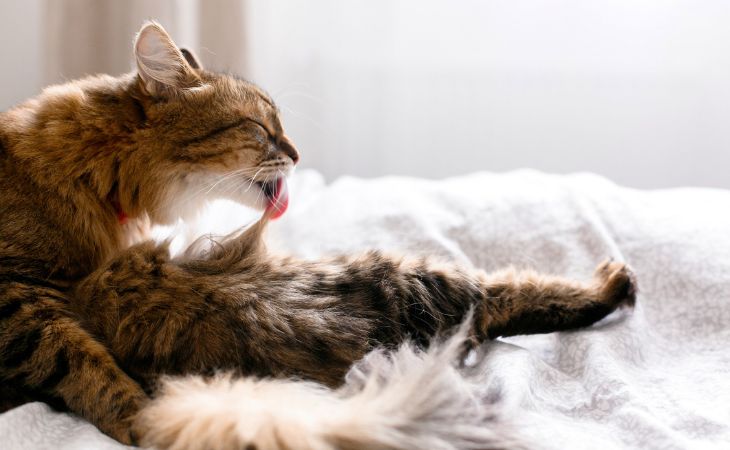
Grooming is a natural part of a cat’s daily life. These clean animals spend a significant part of their day grooming themselves to maintain their coat, regulate their body temperature, and relax. However, when this behavior becomes excessive, it may indicate distress or an underlying health issue. Excessive grooming, also known as psychogenic alopecia in some cases, is a common reason for vet visits and deserves special attention from cat parents.
In this article, we’ll explore the causes of excessive grooming in cats, learn how to recognize the warning signs, and understand what steps you can take to improve your pet’s well-being.
What does excessive grooming look like?
Excessive grooming is characterized by intensive, repetitive, and sometimes obsessive grooming that goes far beyond a cat’s normal behavior. This behavior can lead to localized or widespread hair loss, irritated skin, and even skin lesions.
For some cats, this behavior can go unnoticed because they groom themselves when their owner isn’t around. As a result, people often only notice the visible effects, such as patches of thin fur on the belly, flanks, or legs.
Causes of excessive grooming
Medical causes
Before considering a behavioral disorder, it is important to rule out any underlying medical causes. Many conditions can cause itching or discomfort, leading a cat to lick themselves excessively.
External parasites, such as fleas, are one of the most common causes. A single bite can trigger a severe allergic reaction in some cats. Skin infections, whether they are bacterial or fungal, can also cause significant irritation.
Food or environmental allergies are another possible cause. They can lead to chronic itching and cause a cat to lick themselves to relieve the discomfort. Lastly, some internal pains, particularly joint or abdominal pain, can cause cats to groom a specific area of their body.
Behavioral causes
Once medical causes have been ruled out, excessive grooming may be linked to an emotional disorder. Cats are sensitive to their environment, and stress plays a major role in the development of compulsive behaviors.
A change in their daily routine, such as moving, the arrival of a baby, or a new pet, can cause anxiety. Boredom, a lack of stimulation, or frustration can also be factors, especially for cats that live exclusively indoors.
In these situations, grooming acts as a self-soothing mechanism. It allows cats to release endorphins and calm themselves, but can quickly become excessive and problematic.
How can you tell if grooming is abnormal?
It’s not always easy to tell the difference between normal grooming and excessive behavior. However, there are certain signs that should raise a red flag.
Localized hair loss, particularly on the belly, thighs, or flanks, is often a common sign. The skin may appear red, irritated, or have small scabs. In more serious cases, sores may develop.
A cat’s behavior can also change. A stressed cat may become more aloof, more irritable, or, on the other hand, more demanding of attention. They may also exhibit other unusual behaviors, such as excessive meowing or changes in eating habits.
Diagnosis: an essential step
If your cat is grooming themselves excessively, a visit to the vet is essential. The diagnosis involves a step-by-step process aimed at ruling out medical causes before considering a behavioral cause.
The vet can perform a thorough physical examination, take skin samples, or recommend preventive parasite treatment. In some cases, an elimination diet may be implemented to identify a possible allergy.
Only after all physical causes have been ruled out can a diagnosis of a behavioral disorder be made.
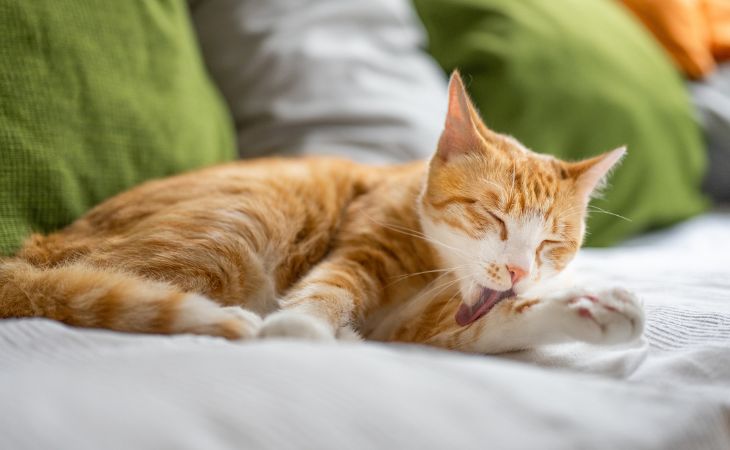
What can you do to help cats that grooms themselves excessively?
Treat the underlying medical condition
When a medical cause is diagnosed, treatment should be adjusted accordingly. This may involve an antiparasitic medication, an antifungal treatment, antibiotics, or a change in diet.
Quick improvement often happens when the underlying cause is properly addressed, confirming the source of the problem.
Reduce stress and create a stimulating environment
When dealing with behavioral issues, it is important to look at your cat’s environment. Giving them a stable, predictable, and stimulating environment goes a long way toward reducing anxiety.
To prevent boredom, try adding more sources of mental and physical stimulation, such as toys, cat trees, or hiding spots. Interactive playtime and quiet moments with their owner each day are also extremely beneficial.
Calming pheromones may also be used to help your cat relax. In addition, sometimes, consulting a feline behaviorist can be useful.
Adjusting your behavior as a cat parent
It is important to avoid yelling at or punishing your cat if they groom themselves excessively. This can heighten their stress and worsen the problem.
Instead, you should be reassuring and kind. Positive reinforcement and creating a stable routine are key to restoring your cat’s well-being.
Can we prevent excessive grooming?
Prevention is mostly about maintaining your cat’s overall well-being. The best ways to do this are by providing a high-quality diet, regular veterinary checkups, and appropriate parasite control.
Your cat’s environment should be stimulating and safe. This is especially important for indoor cats. Providing daily playtime and making sure to limit sources of stress can significantly reduce the risk of behavioral problems.
Key takeaways
- Excessive grooming is not normal and can be hiding a health issue or discomfort
- The medical causes include parasites, infections, allergies, or pain.
- Stress, boredom, or changes in the environment are common behavioral causes.
- Signs of excessive grooming are hair loss, skin irritation, and behavioral changes.
- A vet consultation is necessary to provide a precise diagnosis
- The treatment depends on the identified cause, whether it be medical or related to their emotions.
- A stimulating and reassuring environment is essential for preventing and limiting this behavior.
- Punishing a cat is counterproductive and can worsen the situation.