
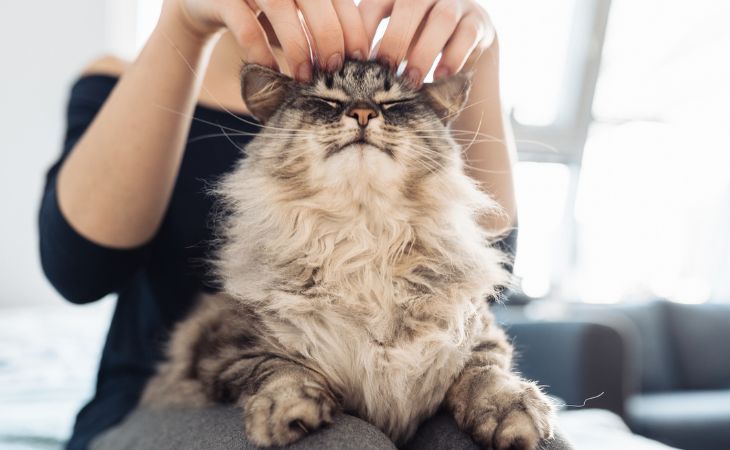
Purr therapy refers to the soothing and potentially beneficial effects of a cat’s purring on human physical and mental health. This concept, popularized by some vets and therapists, is based on the idea that the vibrations emitted by a cat when it purrs act as a form of natural therapy. Although the term is not an official medical discipline, it is attracting growing interest, particularly in the fields of wellness and stress management.
A cat’s purr typically ranges between 20 and 50 hertz, a frequency believed to have positive effects on the body. This unique characteristic intrigues researchers and has sparked numerous theories about its benefits.
How does a cat’s purring work?
A mechanism that remains partly mysterious
Purring comes from a rhythmic contraction of the cat’s laryngeal muscles, combined with a modulation of airflow during breathing. This phenomenon occurs during both inhalation and exhalation, which explains the continuous nature of the sound.
Cats purr in many types of situations: when they are relaxed and happy, but also sometimes when they are stressed, injured, or sick. This suggests that purring serves as a form of self-soothing, or even self-healing.
Vibrations with physiological effects
The low frequencies of purring are particularly interesting. Some studies suggest that they may promote tissue regeneration, improve bone density, and reduce inflammation. These effects are comparable to certain techniques used in medicine, such as therapeutic ultrasound.
Although scientific evidence remains limited, these observations help to strengthen interest in purr therapy.
The mental benefits of purring therapy
A reduction in stress and anxiety
Simply petting a cat and listening to its purr can significantly reduce stress. Contact with a cat promotes the release of endorphins, hormones linked to pleasure and relaxation.
Purring acts as a repetitive and regular sound, similar to a form of sound meditation. It can help calm the nervous system, slow the heart rate, and induce a state of deep relaxation.
Support against depression and loneliness
The presence of a cat can also play an important role in combating loneliness. The emotional bond that develops with the animal provides a feeling of comfort and security.
In some cases, purr therapy is used as a complementary therapy to support people who are suffering from mild depression or emotional distress. The cat then becomes a true source of daily emotional support.
The potential effects on physical health
An influence on blood pressure and the heart
Several studies have shown that cat owners have a slightly reduced risk of cardiovascular disease. Regular contact with a cat, combined with the calming effects of purring, could help lower blood pressure.
This indirect action reduces stress, which is a major factor in cardiovascular diseases.
Aids in healing and recovery
The vibrations emitted by purring may stimulate tissue healing and promote recovery after injury. In cats themselves, the frequencies help with faster healing of fractures and lesions.
Although these effects are still being studied in humans, they reinforce the hypothesis that purring has therapeutic properties.
Purr therapy and the human-animal bond
A beneficial emotional connection
Purr therapy is not based solely on a physical phenomenon, but also on the relationship between the human and the cat. The emotional bond plays a vital role in the benefits experienced.
In addition, taking the time to sit with your cat, petting it and paying attention to its reactions creates a moment of mindfulness. This interaction promotes a state of overall well-being.
A natural approach to well-being
More and more people are looking for natural solutions to improve their quality of life, and purr therapy appears to be a gentle and accessible alternative.
While it does not replace medical treatment, you can integrate it into a comprehensive wellness approach, alongside other practices such as meditation or relaxation.
Key takeaways
- Purr therapy is based on the soothing effects of a cat’s purring.
- The sound emits low frequencies between 20 and 50 hertz.
- Purring can help reduce stress and anxiety and promote relaxation.
- Contact with a cat stimulates the production of endorphins.
- It is believed that it has positive effects on blood pressure and the heart.
- Vibrations may aid in healing and recovery.
- The emotional bond is essential to the benefits experienced.
- Purr therapy is a complementary, but not medical, approach.
- It is part of a natural approach to daily well-being.