
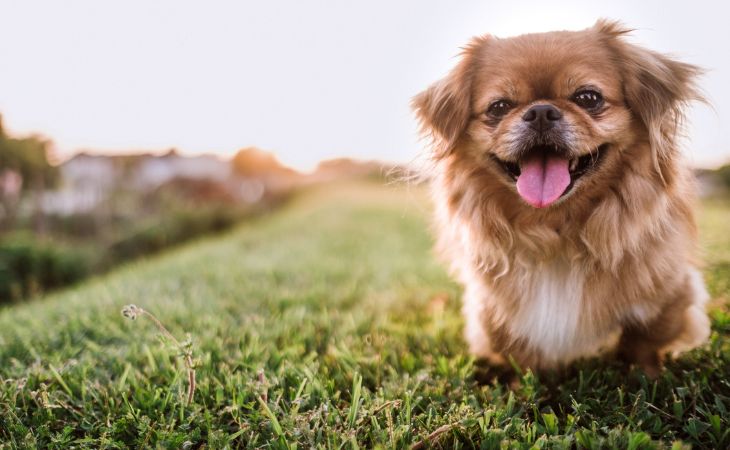
Breed: Pekingese | Size: Small | Average lifespan: 13 to 15 years | Temperament: Calm, affectionate, and intelligent | Coat: Moderately long | Origin: China.
The Pekingese is a small dog breed that originated in China. The breed is known for its lion-like silhouette and its dignified and noble appearance.
The Pekingese’s origins
A noble breed and guardian of the temples of imperial China
To begin with, the Pekingese breed’s origins date back over 200 years to the Han Dynasty (206 BC to 220 AD). It began to take on its current appearance between 618 and 907. The breed was revered and served as a guardian of the temples of the Chinese imperial family. Theft or unauthorized sale of this dog was punishable by death. According to legend, the breed is the result of a union between a lion and monkey.
During the Qing Dynasty (1644-1912), the Pekingese enjoyed the status of a noble pet. Emperors and members of the imperial court attached great importance to these small dogs, which they considered lucky charms and symbols.
The popularizing of the Pekingese in the West
During the looting of the Summer Palace (Second Opium War) in 1860, Pekingese dogs were stolen by British troops. Some of these dogs were taken back to England as spoils of war. Queen Victoria received one as a gift, as she was a great dog lover. She nicknamed her Pekingese “Looty,” a name that alludes to the circumstances of its arrival in Europe.
The introduction of these dogs to England marked the beginning of the Pekingese’s popularity in the West. The nobility and members of high society were captivated by the unique appearance and temperament of these small dogs. Their breeding began in the 1890s with a focus on preserving the breed’s original characteristics.
In 1898, the British Kennel Club officially recognized the Pekingese. This dog remains very popular worldwide and is continuing to be adopted by many families. The official breed standard for this dog breed was published in March 2009.
The Pekingese’s character
As the Pekingese is proud, affectionate, and intelligent, it is a charming and regal companion. However, keep in mind that this dog has a strong temperament. This self-assured dog, although a wonderful companion, can sometimes be very stubborn.
The qualities of the Pekingese
To begin with, one of the Pekingese’s most interesting traits is its loyalty to its family. When it bonds with its owners, it develops a deep and lasting connection, making it a faithful companion for life. In addition, this breed’s intelligence is evident in its daily life. These small dogs are capable of learning and understanding complex commands.
Additionally, the Pekingese displays courage despite its small size. Its past as a palace guardian motivates it to stand up to perceived threats. This dog is also valued for its calm and dignified temperament. It adapts well to various living environments, including apartments. This peaceful nature makes it a suitable companion for seniors or individuals who prefer dogs that require less exercise.
Although not overly demonstrative, Pekingese dogs enjoy cuddles and close contact with their owners. They possess undeniable charm, expressive faces, and a majestic gait. Thanks to their personality, they are often the center of attention and a source of joy.
Are there any downsides to having a Pekingese?
The Pekingese’s stubbornness is a character trait that presents a challenge for pet owners. It tends to have a strong will due to its royal heritage. This behavior is particularly noticeable during training sessions or in everyday life. This dog sometimes chooses to ignore commands when it doesn’t deem them to its liking. The independence of this imperial breed is a double-edged sword. It can be left alone without anxiety and be unresponsive to its owner’s wishes.
The Pekingese is generally wary of strangers. This makes it a good watchdog, but complicates socialization. It typically displays its possessiveness through very protective behavior towards its toys, food, or even its owners. If it is not properly trained from a young age, it can become aggressive.
Unfortunately, this animal can develop what is known as “small dog syndrome.” It tries to compensate for its small size with a dominant attitude. This characteristic requires careful management to avoid conflicts. When bored or lacking stimulation, it may bark excessively.
The physical characteristics of the Pekingese
General
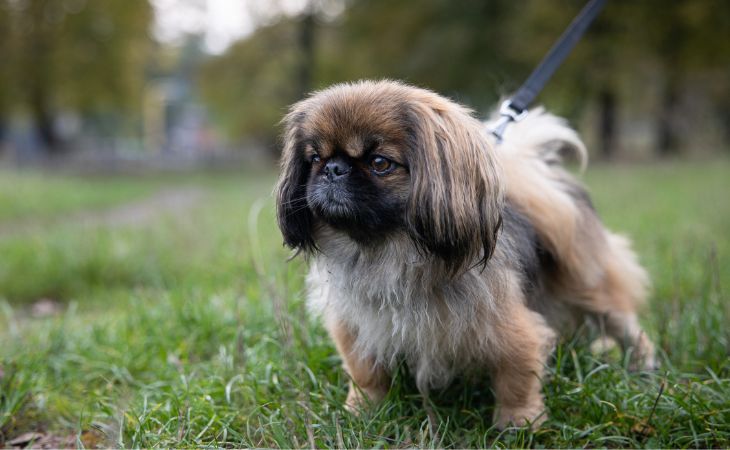
To start off with, the Pekingese is a small dog with a noble allure. Its silhouette is characterized by an almost square shape and a body length greater than its height at the withers. The tail of this breed of dog breed is set high and curled over its back.
Head
The Pekingese has a broad, flat head between its ears, with a massive skull compared to its body size. The wrinkles on its forehead and around its muzzle are characteristic features of this breed, contributing to the distinctive facial expression of this pet of Chinese origin. When it comes to this breed’s eyes, they are large, round, and expressive. Their heart-shaped ears hang down along its cheeks, giving the Pekingese a gentle appearance.
Body
When it comes to the body, the Pekingese is sturdy and well-proportioned with a broad chest. Its thick, short neck supports its massive head. The shoulders are sloped and blend harmoniously into the body. This companion animal has small front legs that match its silhouette. The Pekingese’s back is straight and without slope between the withers and the croup.
Coat, color, and grooming
Coat
The Pekingese’s coat is a truly royal, consisting of a double coat. The undercoat is soft and dense, while the topcoat is longer and straighter. In addition, this pet has a beautiful mane around its neck and shoulders.
Colors
When it comes to the Pekingese’s coat colors, it boasts a diverse color palette befitting its imperial status. Common shades include fawn, black, cream, and white. Some dogs have rarer coats such as chocolate or brindle. This diversity of colors and the luxurious texture of the Pekingese’s coat make it a truly unique companion animal.
Grooming a Pekingese
The Pekingese is small and doesn’t burn many calories due to its sedentary lifestyle. Because of this, it’s best to feed the Pekingese high-quality food, focusing on meat. In addition, weigh your dog regularly to ensure it doesn’t become overweight.
In order to take good care for your Pekingese dog, use the appropriate grooming tools. It should be brushed daily, especially during shedding season, to prevent painful matting. After walks, check its coat for dirt and debris. It’s good to purchase a high-quality, gentle shampoo to bathe your Pekingese once a month.
Last but not least, this dog’s floppy ears should be checked daily. Clean them as needed with a specific product and pay attention to the length of their nails.
Did you know?
Lastly, many dogs were taken aboard the Titanic in 1912. When the ship sank, Henry Sleeper took his Pekingese, Sun Yat Sen, into lifeboat No. 3. This pet was therefore one of the survivors of this great tragedy.
The Pekingese at a glance
Size: 15 to 25 cm for males and 14 to 24 cm for females.
Weight: 3 to 5 kg (≈ 6.6 to 11 lb) on average.
Health: Pekingese dogs are prone to eye and dental diseases. Female dogs require veterinary assistance during labor. This breed prefers temperate climates.
Average lifespan: between 13 and 15 years
Is the Pekingese good with children? Pekingese dogs can be great companions for older, calm children. However, it’s important to supervise interactions with younger children to prevent accidental injuries to the dog.
Is the Pekingese difficult to take care of? The Pekingese is a pleasant indoor dog, but its independent and stubborn temperament can make training difficult. In addition, it requires regular grooming due to its thick coat.