
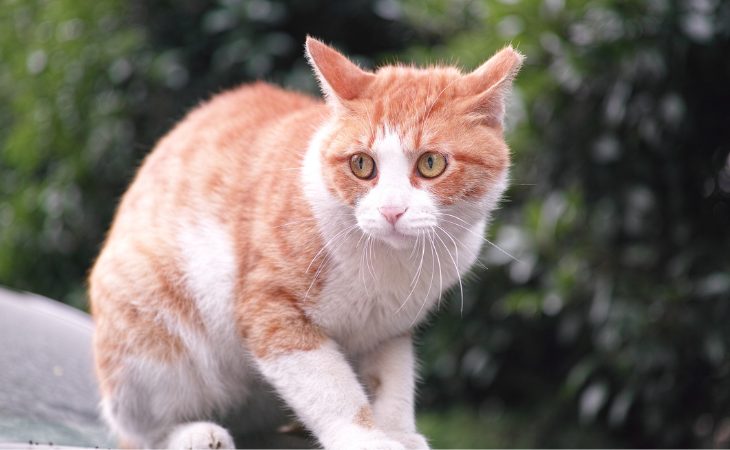
Cats are often seen as independent and calm animals that can easily adapt to the world around them. However, these animals are actually sensitive to changes and disturbances around them. Stress in cats is common and can have real consequences on their health and behavior. You can learn to identify sources of stress and the associated signs to ensure you protect your cat’s well-being.
In this article, learn how to tell if your cat is stressed, what the most common causes are, and what steps you can take to help your cat.
What is stress in cats?
Stress is the body’s natural response to a situation perceived as a threat or disruption. In cats, this reaction can be triggered by a change in their environment, a shift in their routine, or a situation they cannot control.
Unlike more social animals, cats are territorial creatures. They build their sense of security around very specific landmarks around their territory: resting spots, feeding areas, daily routes, and familiar scents. When these landmarks are changed, their sense of security and safety can be disrupted.
In the short term, stress is a normal response that helps cats adapt. But when this situation persists, it is referred to as chronic stress. Chronic stress can have a significant impact on a cat’s behavior and health, particularly by weakening their immune system.
The most common causes of stress in cats
Many everyday situations can cause stress in a cat. While some are obvious, such as moving to a new home, others can be more subtle.
Changes in their environment
As we mentioned earlier, cats appreciate stability and routine. Any change in their territory can be a source of anxiety. Moving, home renovations, or receiving new furniture can be enough to disrupt their sense of security.
Even changes that seem insignificant to humans, such as moving their litter box or changing the location of their food bowl, can be stressful for them.
The arrival of someone new
Introducing a new pet into the home is a common cause of stress. The cat may perceive this intruder as a threat to their territory or to access to resources (food, litter, human attention).
The arrival of a baby or a new roommate can also cause an imbalance in their environment. This is particularly due to new smells, unusual noises, and changes in their routine.
Not enough stimulation
Contrary to some misconceptions, indoor cats can also suffer from stress. When they do not have enough activities or opportunities to stimulate their hunting instincts, they can develop frustration and anxiety.
A boring environment, without observation areas, games or regular interactions, can lead to a cat becoming progressively stressed.
Conflicts between cats
In homes with multiple cats, territorial tensions can be a significant source of stress. Even if the conflicts aren’t always visible, some cats may live in a environment of constant competition.
Access to resources (bedding, food, sleeping areas) becomes an issue that keeps them in a state of vigilance and anxiety.
Signs of stress in a cat
Stress in cats can show itself in many ways. Some signs are physical, while others are behavioral. These changes can appear gradually or more suddenly.
Behavior changes
A stressed cat can change the behavior they normally have. Some can become more scared or hide more, while others may become more irritable or aggressive.
It is also possible for a cat to become excessively clingy with their human, constantly seeking comfort.
Unusual behaviors may also include more frequent meowing, unusual restlessness, or conversely, apathy.
Cleanliness issues
Urine marking is one of the most well-known signs of stress in cats. Your cat may start urinating outside their litter box in order to deposit their scent and try to reassure themselves.
It is important to note that these behaviors are generally not a form of revenge, but rather just a sign of distress.
Compulsive behavior
Some cats develop repetitive behaviors when stressed. This can result in excessive licking, sometimes leading to hair loss or skin irritation.
Other cats may start scratching excessively or eating compulsively.
Physical signs
Stress can also manifest itself through physical symptoms. A stressed cat may experience a loss of appetite, digestive problems, or a decrease in energy.
Unfortunately, in some cases, chronic stress can even promote the onset of certain pathologies, such as urinary tract infections or dermatological disorders.
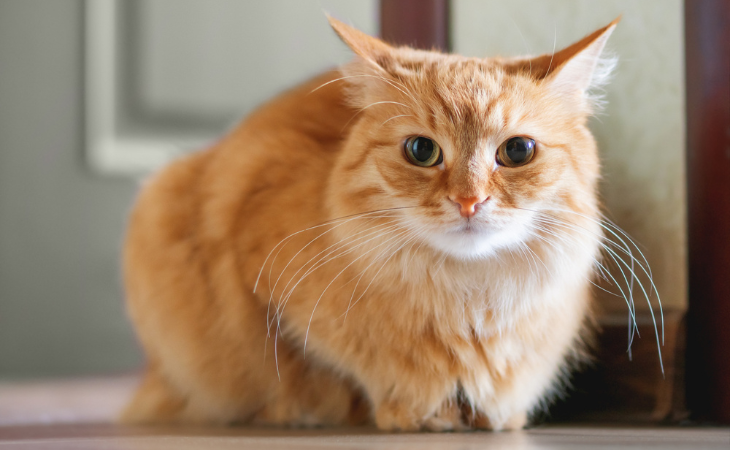
The consequences of stress on a cat’s health
When stress becomes chronic, it can have a real impact on a cat’s health. The body remains in a prolonged state of alert, which can disrupt several physiological functions.
The immune system can be weakened, making the cat more susceptible to illness. Urinary problems, particularly feline idiopathic cystitis, are frequently associated with stress.
Skin problems related to excessive licking, digestive disorders or loss of appetite can also appear when the cat lives in an anxiety-provoking environment.
For this reason, a lasting change in behavior must always be taken seriously.
How do you reduce stress in cats?
The first step is to identify the source of the stress. Once this is identified, it becomes easier to adapt the cat’s environment to restore a sense of security.
Enriching the cat’s environment is often an effective solution. Providing cats with high places, hiding spots, or areas in the home that can be used for observation allow them to better control their surroundings.
Playing is also an excellent way to reduce anxiety. Play sessions stimulate their hunting instincts and allow them to release their energy in a positive way.
Routines also play a vital role in their well-being. Feeding them at regular times, maintaining stable routines, and avoiding sudden changes all contribute to strengthening its sense of security.
In some cases, the use of calming pheromones or consultation with a veterinarian or feline behaviorist may be necessary to support your cat.
Prevent your cat from getting stressed
Prevention relies mostly on understanding your cat’s fundamental needs. A stable, enriched environment suitable for their natural behavior significantly reduces the risk of stress.
Respect for their territory, the presence of several resources in multi-cat homes and regular playtime help them to maintain a good emotional balance.
Observing your cat daily remains one of the best ways to quickly detect signs of distress and act before the situation worsens.
Key takeaways
- Stress is a natural reaction when faced with a threatening or disturbing situation.
- Cats are particularly sensitive to changes in their environment and to alterations in their familiar surroundings.
- Common causes include moving, the arrival of a new pet or baby, conflicts between cats, or an unstimulating environment.
- Signs of stress can be behavioral (aggression, isolation, meowing) or physical (loss of appetite, digestive problems).
- Cleanliness problems and excessive licking are common manifestations of stress.
- Chronic stress can have consequences for health, particularly on the urinary and immune systems.
- Enriching the environment, play and stable routines often help to reduce anxiety.
- In cases of persistent stress, it is recommended to consult a vet or a feline behaviorist.