
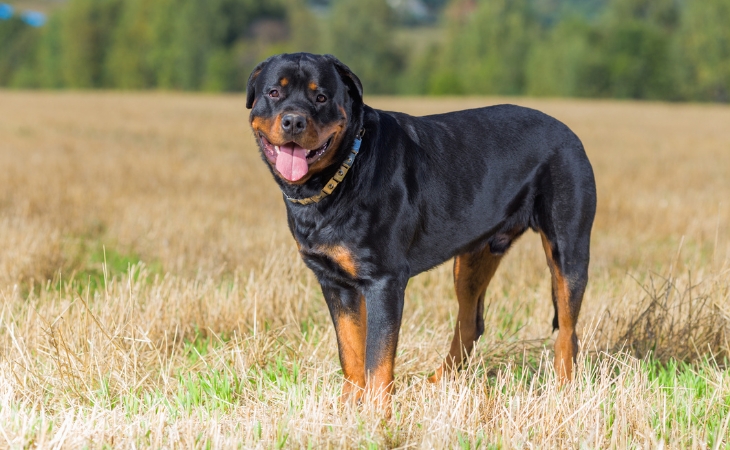
Breed: Rottweiler | Size: Medium to large | Average lifespan: 9 to 12 years | Character: Loyal, brave, and intelligent | Coat: Medium | Origin: Germany.
The Rottweiler is a guard dog known for its physical strength. The dog also thrives in a family setting when it feels loved and cared for.
The origins of the Rottweiler
A breed with German origins
To begin with, the Rottweiler is one of the oldest molossoid breeds in the world, originating from the Rottweil region of Germany. The breed emerged from crossing the Tibetan Mastiff with a herding dog. Originally, the animal was known as the “Metzgerhund,” which literally translates to “butcher’s dog.” Like its ancestor, it guarded and protected the cattle belonging to its owners—who were primarily Romans. The dog’s protective instinct quickly set it apart, making it a highly valued guard dog.
Laws regarding Rottweilers
In Geneva and several other Swiss cantons, the Rottweiler is banned by law. It is prohibited to breed and acquire this type of dog in this part of the world.
In France, the animal is classified as a Category 2 “dangerous dog” under the Law of January 6, 1999. If you own one, this dog needs to be microchipped or tattooed and vaccinated against rabies. In addition, you are required to declare the dog to the local town hall to obtain an ownership permit. Moreover, you must also provide proof of civil liability insurance and a certificate of aptitude. Minors, adults under legal guardianship, and individuals with a criminal record (specifically, those with entries on their “Bulletin No. 2” criminal record extract) are not permitted to adopt a dog of this breed.
The character of the Rottweiler
The Rottweiler is a dog with a balanced temperament when well-trained.
The qualities of the Rottweiler
This breed is naturally calm and composed, and develops a deep affection for its owner and typically displays unwavering loyalty. It is an intelligent dog that is highly capable of learning, especially when it comes to games that contribute to its well-being.
At the same time, the Rottweiler is brave and vigilant when the situation demands it, particularly when protecting those it loves. It is a dog that acts as a deterrent yet remains composed, commanding admiration for its analytical ability and sense of responsibility. This breed’s adaptability to various situations and need for human closeness reinforce its affectionate and sociable nature.
Are there any downsides to having a Rottweiler?
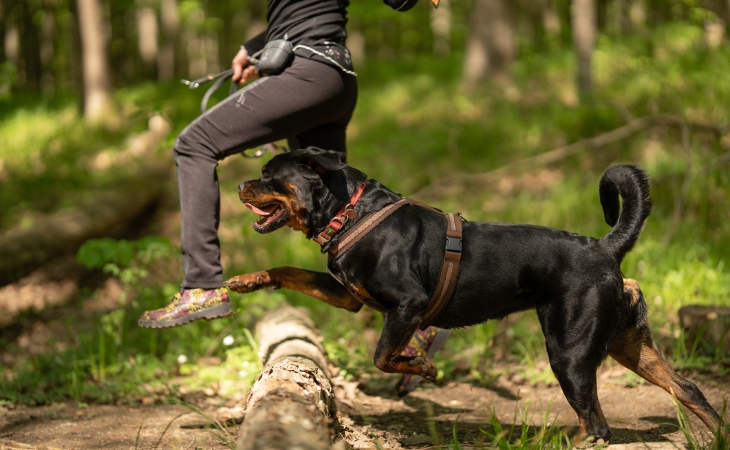
The Rottweiler has high daily exercise needs. Its love for physical exertion requires sufficient activity to allow it to burn off energy. If its needs for running or play are not met, it can quickly become frustrated and develop destructive behaviors or restlessness.
This dog also enjoys demanding activities such as canicross or bikejoring. Therefore, you need to be active and able to keep up with this pace, especially since the breed does not handle confinement or solitude well. In addition, its love for water-based play can also pose a challenge if the environment does not allow for such activities. Consequently, adopting this type of dog is not recommended for sedentary individuals or those with very busy schedules.
The physical characteristics of the Rottweiler
General
The Rottweiler is a robust, medium-to-large dog. Its body suggests strength, endurance, and agility. This powerful animal is best known for its proud and confident stance, making it a highly respected breed.
Head
The Rottweiler’s skull is broad and slightly rounded. Its triangular ears hang and lie close to the sides of the head. The dog has a strong muzzle and a powerful jaw, enabling it to effectively perform its guarding duties. Its dark, expressive eyes reveal keen intelligence and great loyalty to its owner.
Body
The Rottweiler’s back is straight and sturdy. It has a broad, deep chest that reveals its great lung capacity. The dog’s limbs are muscular, with particularly strong hindquarters that reflect its endurance and strength. This imposing build does not hinder the dog’s agility, as its movements remain fluid and well-coordinated.
Coat, colors, and care
Coat
The Rottweiler’s coat is short, dense, and smooth. It consists of an undercoat and a topcoat that provide protection against the elements. The coat lies close to the body and is slightly longer on the neck and thighs, though the overall appearance remains uniform. This robust texture contributes to the dog’s natural resistance to the elements.
Colors
The Rottweiler is easily recognizable thanks to its black coat and clearly defined tan markings. The color of these distinctive markings ranges from rust to mahogany. These markings appear above the eyes, on the cheeks, muzzle, chest, and legs, and beneath the tail. This combination of black and reddish-brown gives the dog an appearance that is both imposing and elegant.
Taking care of a Rottweiler
Grooming a Rottweiler is relatively simple. This is thanks to the nature of its coat. Brushing weekly is generally enough to remove dead hair and maintain the coat’s shine.
Furthermore, during shedding periods, it may be necessary to brush this dog more frequently to prevent the buildup of debris in the coat. In addition, regularly checking specific areas of the dog’s (ears, eyes, claws) also helps prevent health issues. With proper care, the Rottweiler can maintain a well-groomed appearance and stay healthy.
Did you know?
An 80-year-old woman sprained her ankle while hiking near Oxford and spent 15 hours alone in the woods after her accident. David Malt and his nephew Jack, who were walking their four Rottweilers, discovered the woman thanks to the dogs. The dogs had run to her, surrounding her to keep her warm and comfort her.
The Rottweiler at a glance
Size: Male dogs measure 61 to 69 cm. Females measure 56 to 63 cm.
Weight: A male Rottweiler weighs between 50 and 60 kg (≈ 110.2 and 132.3 lb). When it comes to the female Rottweiler, they weigh between 35 and 50 kg (≈ 77.2 and 110.2 lb).
Health: The Rottweiler breed is generally healthy, but it can suffer from certain joint disorders and dysplasia (of the hip or elbow). Unfortunately, the breed is also prone to heart disease, hypothyroidism, and cancer.
Average lifespan: 9 to 12 years.
Is the Rottweiler good with children? Yes. The Rottweiler is a fairly calm family dog. The breed can be a good playmate for children if it is well-socialized and trained. However, do not leave them unsupervised, as both can exhibit unpredictable behavior.
Is the Rottweiler easy to train? Despite its bad reputation, the Rottweiler is not difficult to train if it feels safe. Their training needs to be firm and consistent without being harsh.