
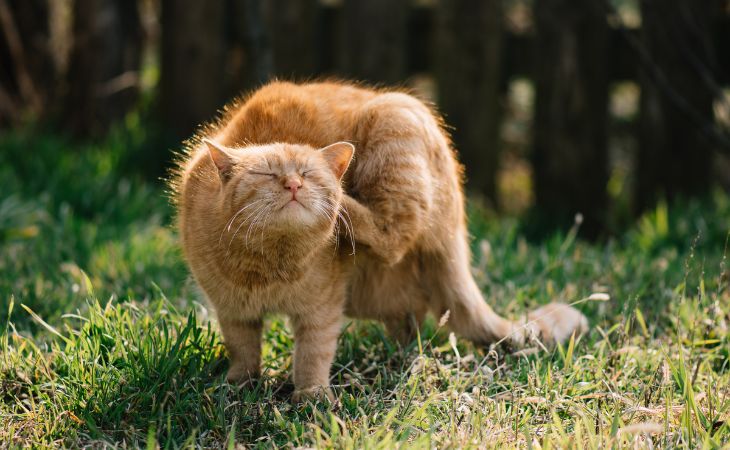
Itching in cats, which is also known as pruritus, is a common reason for a visit to the vet. A cat that scratches, licks itself excessively, or has areas of irritated skin isn’t just experiencing temporary discomfort—it may be a sign of an underlying health problem. If you understand the cause of the itching, it will allow you to take effective action and prevent the situation from getting worse.
How do you recognize when a cat is suffering from itching?
If your cat only scratches themselves occasionally, it is nothing to worry about. With that being said, if this behavior becomes repetitive or compulsive, it is important to pay attention to it. Itching can appear in several different ways, sometimes subtly at first.
Your cat may lick themselves excessively, particularly on the belly, flanks, or inner thighs. Some cats nibble or scratch themselves until they develop sores. You may also notice patches of thinning fur, scabs, redness, or thickened skin. In more advanced or serious cases, your cat may become irritable, restless, or less playful due to constant discomfort.
These signs should not be ignored. They generally indicate a precise cause that needs to be identified.
The main causes of itching in cats
Itching can stem from a variety of origins. Some causes are benign and easy to treat, while others require special treatment from a vet.
External parasites
The main cause of itching in cats is parasites. For example, fleas, in particular, can cause intense allergic reactions. One bite is often enough to causes severe itching in a sensitive cat.
Harvest mites, lice, or mites that cause scabies can also cause severe itching. In these cases, cats often scratch around their head, neck, or the base of their tail. The skin may become red, irritated, or even infected if the cat injures itself while scratching.
Allergies
Allergies are another common cause of itching in cats. They can be food-related or environmental.
Food allergies happen when the immune system reacts to a protein found in food, such as beef, chicken, or certain grains. When caused by this, itching is often concentrated around the head, neck, and ears, but may also be accompanied by digestive issues.
Environmental allergies, which are known as atopic dermatitis, are linked to allergens such as dust mites, pollen, and mold. They can typically cause chronic itching, which can vary depending on the season or the cat’s environment.
This Letsgetpet article might also interest you: Allergies in cats: causes, symptoms, and treatments
Skin infections, whether they be bacterial or fungal, can also cause itching. Ringworm, for example, is a fungal infection that can cause patches of hair loss and, in some cases, scaling.
Bacterial infections often develop as a result of wounds caused by scratching. The damaged part of the skin can become a gateway for germs, which worsens the itching and can lead to an unpleasant odor or discharge.
Stress and behavioral issues
Sometimes, itching is not caused by a physical condition but by a behavioral issue instead. When a cat is stressed, anxious, or bored, they can start to lick themselves excessively, which is known as psychogenic alopecia.
They usually do this on their belly, flanks, or legs. While the skin may appear normal, the fur can be broken or pulled out. This issue can stem from a change in their environment, the arrival of a new pet, or a lack of stimulation.
When should you see a vet?
It is recommended to consult a vet as soon as the itching persists for more than a few days, worsens, or is accompanied by skin lesions. A visit to the vet is also necessary if the cat is losing its fur, has scabs, significant redness, or a change in behavior.
The vet can perform a thorough examination of your cat’s skin and coat. Depending on the situation, the vet can take skin biopsies, perform a parasite screening test, or recommend an elimination diet to identify a possible food allergy.
An accurate diagnosis is essential to be able to develop an appropriate treatment plan.
What treatments can help relieve itching?
Treatment depends entirely on the cause that is identified. If the itching stems from parasites, appropriate anti-parasitic treatment is usually enough to resolve the problem. It is often necessary to treat all animals in the household as well as the environment.
If the itching is caused by a food allergy, the vet may recommend a specific diet containing hydrolyzed proteins or a protein source that is new to the cat.
If your cat suffers from environmental allergies, treatment may include medication to reduce inflammation and itching. It could also include measures to limit exposure to allergens.
Skin infections often require anti-fungal or antibiotic treatments. These can sometimes be combined with topical treatments such as shampoos or lotions.
When itching stems from behavioral issues, it is important to identify the source of stress. Enriching the environment, using calming pheromones, or behavioral counseling can help reduce excessive grooming.
How can I help relieve and prevent itchiness in my cat?
Prevention relies first and foremost on proper coat care and regularly monitoring your cat’s health. Appropriate parasite treatment—even for indoor cats—is essential to prevent any infestations.
A high-quality diet, tailored to the cat’s age and needs, also helps maintain healthy skin. You should also reduce sources of stress and provide a stimulating environment, with toys, hiding spots, and opportunities for interaction.
Lastly, it is important to regularly check your pet’s coat. This allows you to quickly spot signs of irritation or parasites.
Key takeaways
- Itching in cats, known as pruritus, is a common symptom. It often indicates an underlying health problem.
- Cats that scratch, lick, or nibble at themselves excessively should be monitored. This is especially the case if redness, scabs, or hair loss appear.
- The most common causes are external parasites, food or environmental allergies, skin infections, and sometimes stress.
- Just one flea can be enough to cause severe itching in a sensitive cat.
- Allergies can cause chronic itching and often require veterinary care.
- Skin infections, like ringworm or bacterial infections, could make the itching worse and needs to be treated promptly.
- Stress can cause excessive licking. This can even happen where there are no visible skin problems.
- It is best to consult a vet if the itching persists, worsens, or if lesions appear.
- Treatment always depends on the cause. A few common treatment options include anti-parasitic medications, a special diet, medication, or behavioral therapy.
- Effective prevention relies on regular use of parasite treatment, a proper diet, and a stable and enriching environment.